World of Wearables 2026 Submission: Vain
“An entity that craves attention. One whose light is fed by adoration. Her size is directly related to an innate urge to be seen, to be adored. It is this fervor that empowers her. As eyes turn towards her, as she is captured by glances, her veins of light ignite. She is vain.”
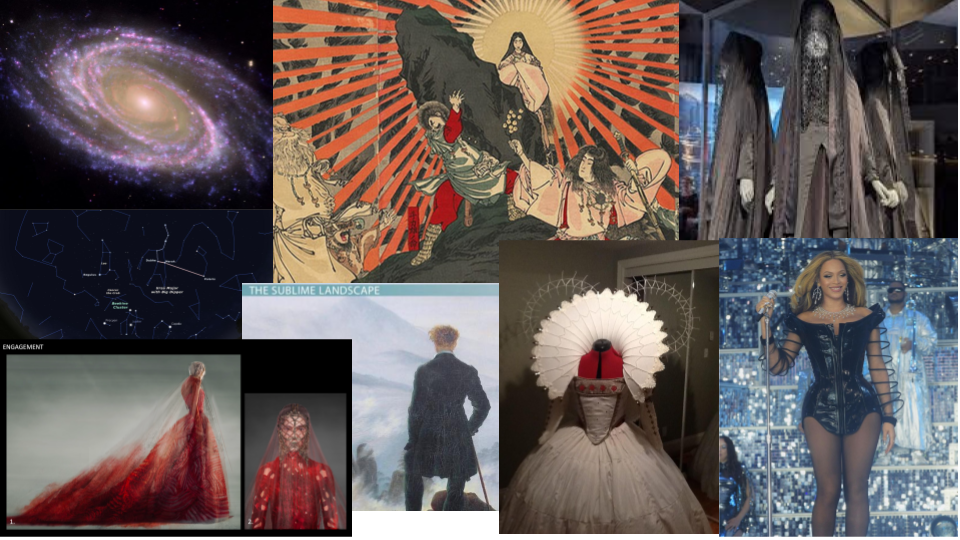
We were initially interested in religion, deities, and constellations for our pieces. We wanted to explore the anthropomorphic form in a subversive way. The story of Amaterasu inspired the idea of man-made gods and truths, and how fervent devotion amplifies a deity's power and influence. We connected these ideas for our look: a blend of sci-fi and Regency-era fashion to depict an extraterrestrial being that demands attention. We are exploring the manifestation of perceived truths.
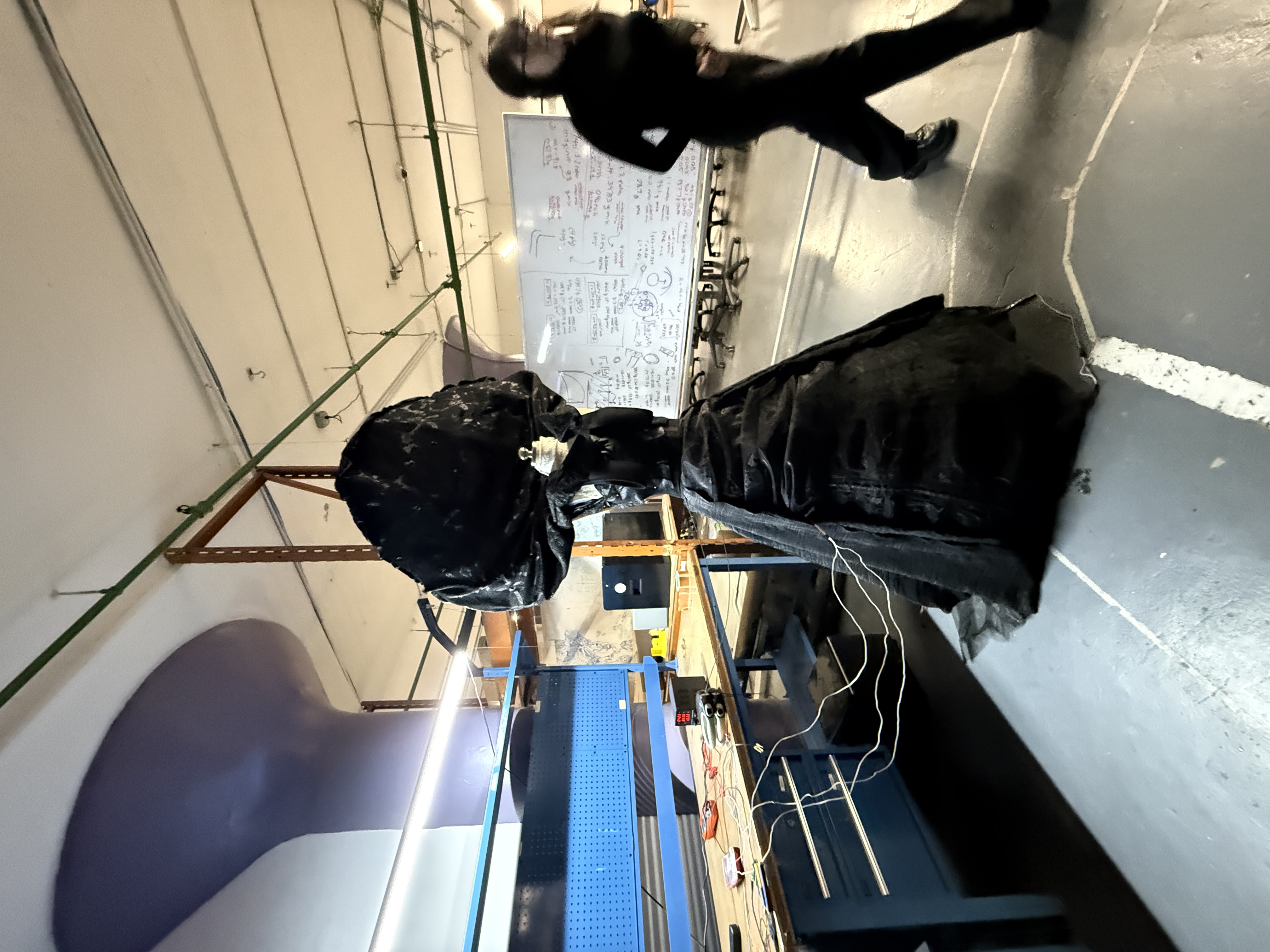
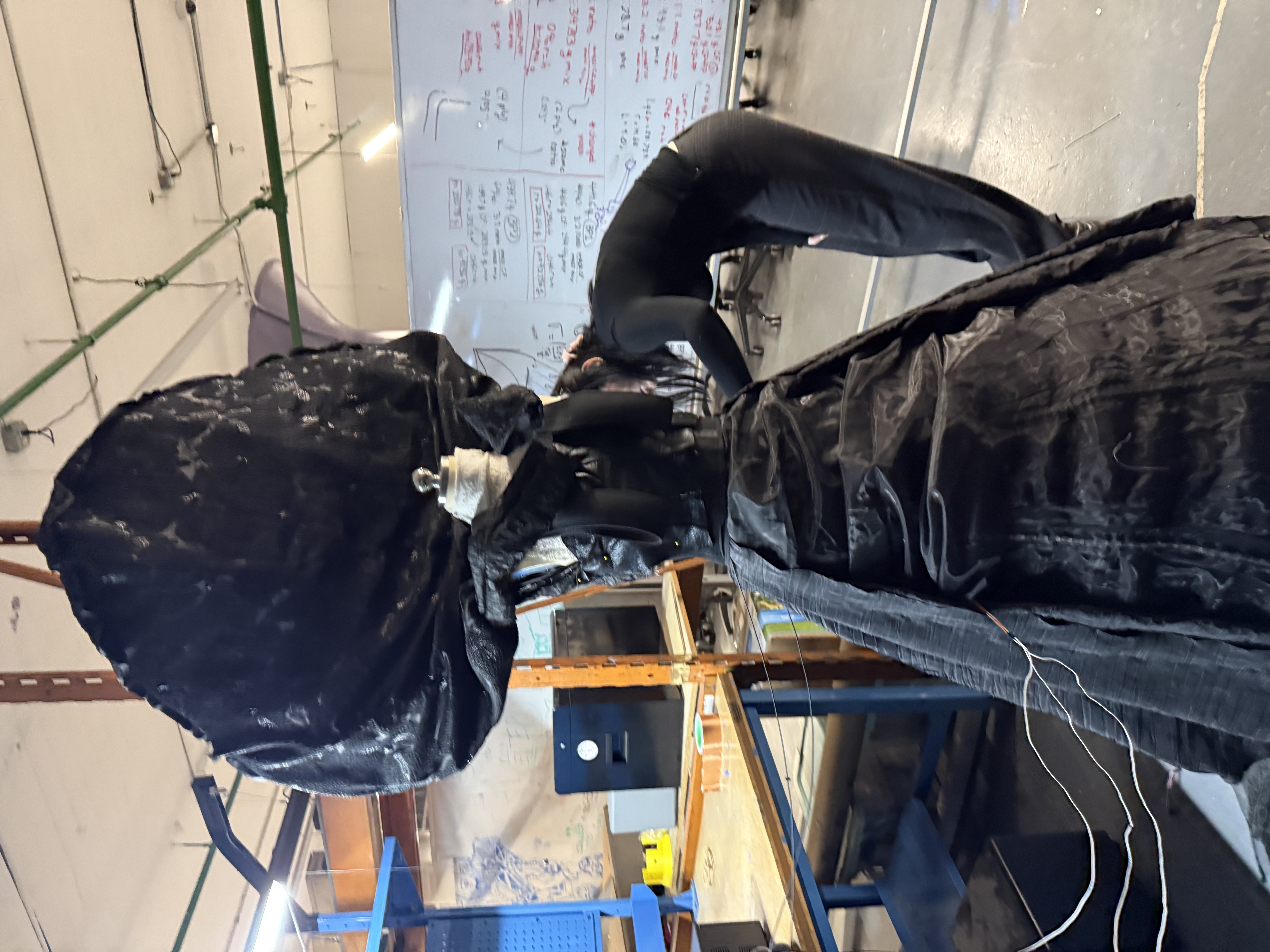
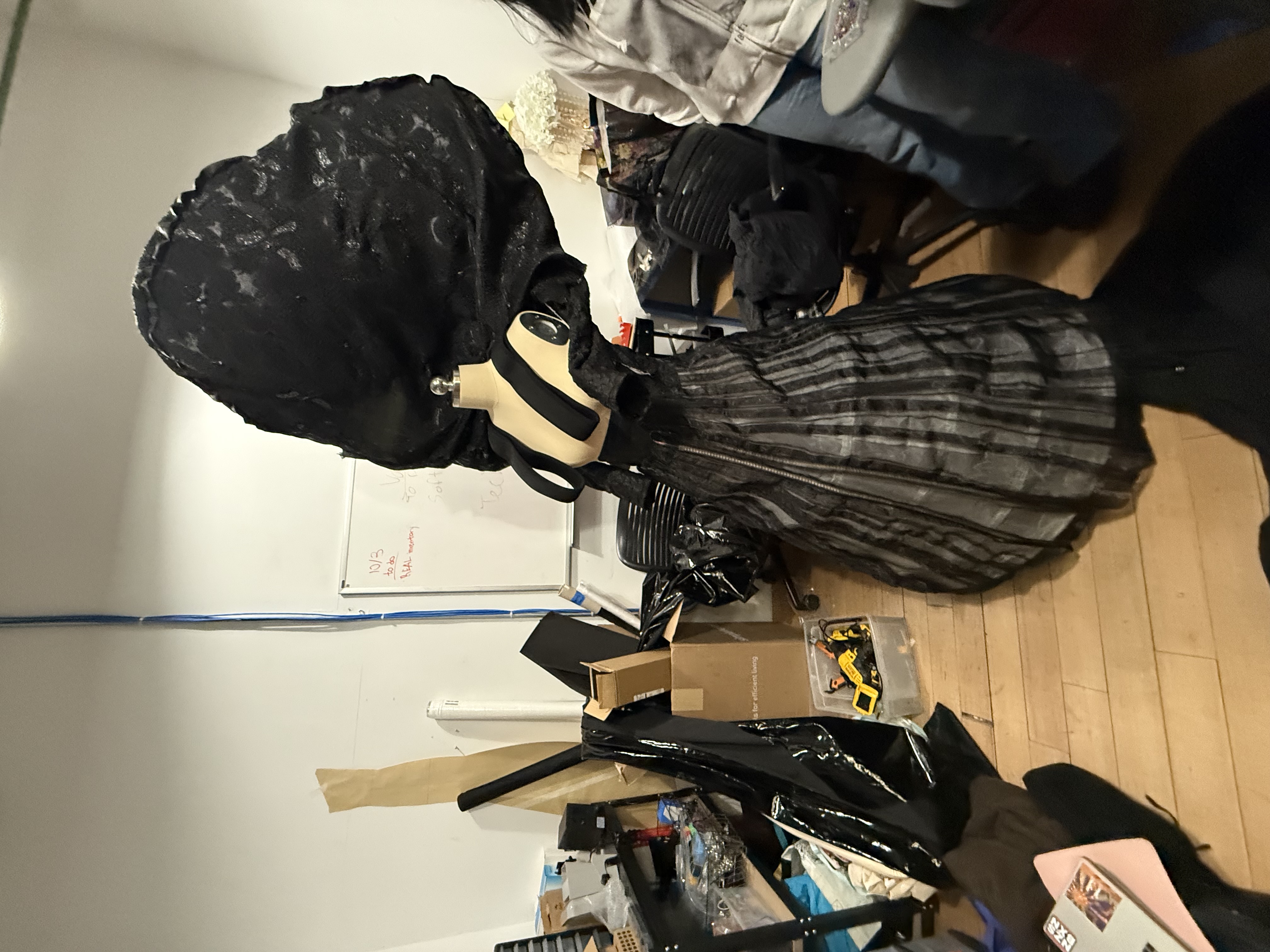
Visage is a garment covered with LED strips that illuminate its surface as the motion sensors attached to the dress move. The dress comes to life as the model is worshipped by an audience; as her vanity peaks, she moves to command more adoration. As the audience is captivated by the striking silhouette and attempts to record her, the dress reacts to the attention. It's an avant-garde representation of the relationship between worshippers and gods.


Vain explores the avant-garde through storytelling, multimedia, scale, and innovative techniques. Once we had our idea of abstracting the human form into an extraterrestrial deity whose power is fueled by adoration, we wanted to incorporate an older, open-source light-tracking technology our group had developed. The goal was to make the dress come to life as the cameras and their lights interacted with the garment. However, incorporating this technology was tricky because it required large hardware that would obscure the details of the garment and disrupt a glamorous look. We spent many weeks experimenting.
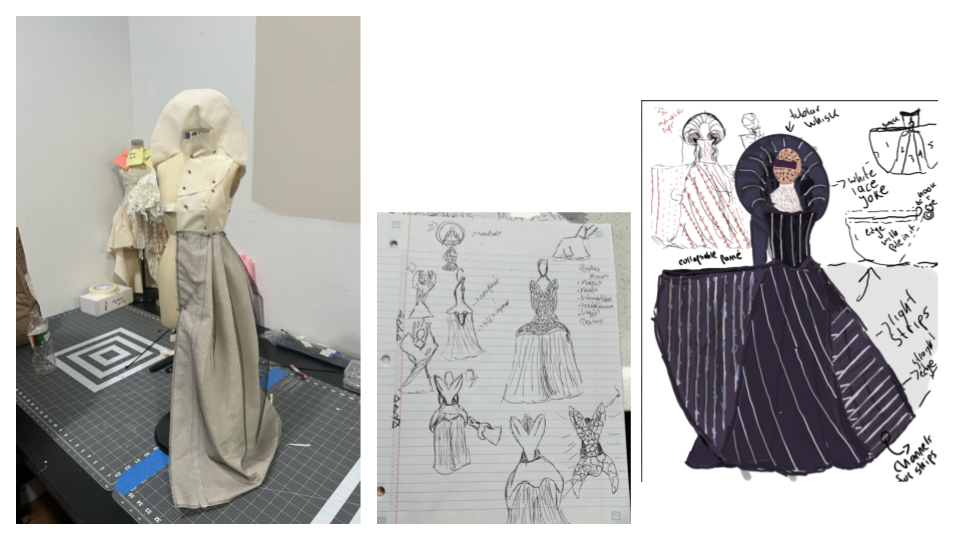
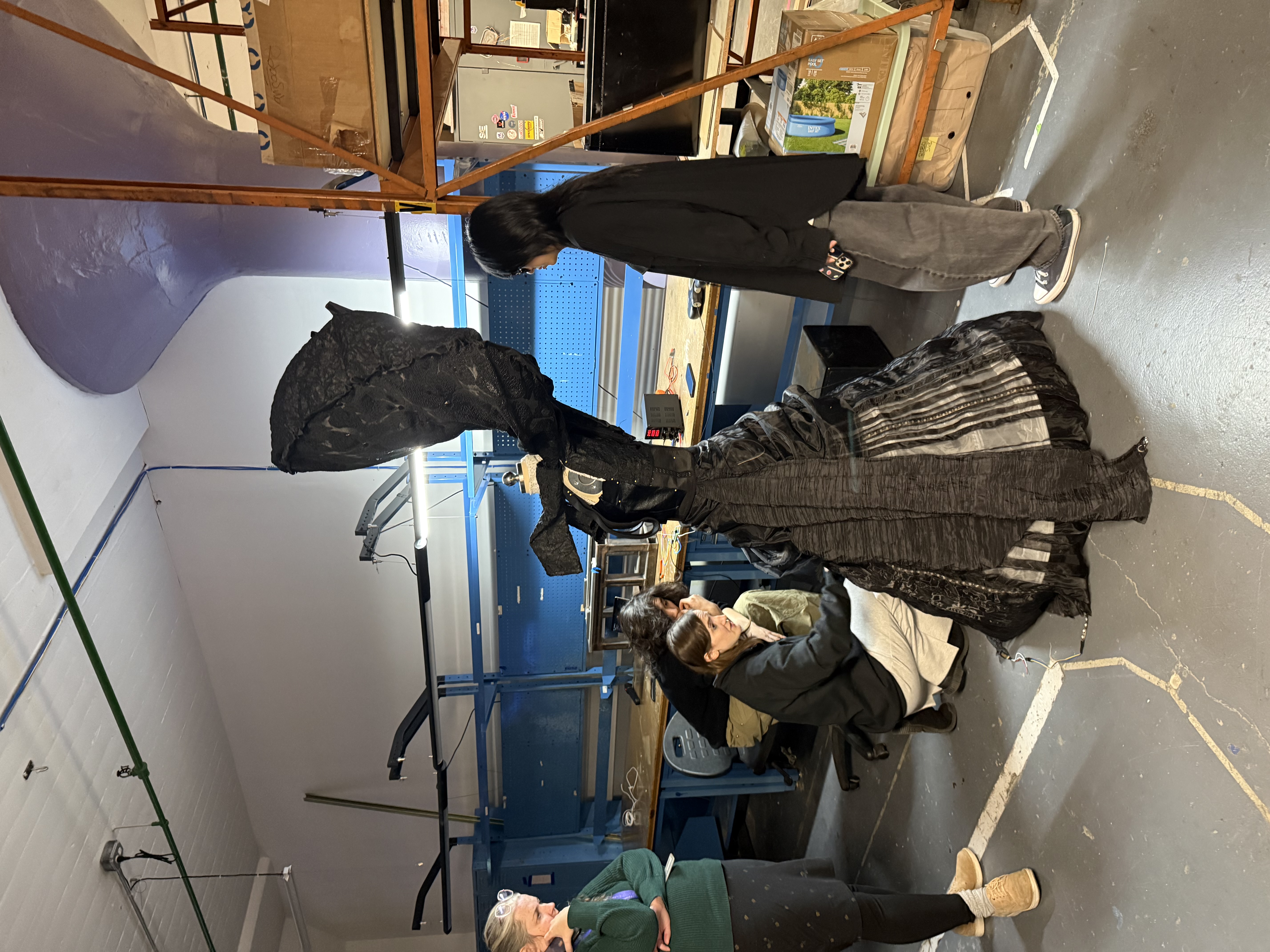
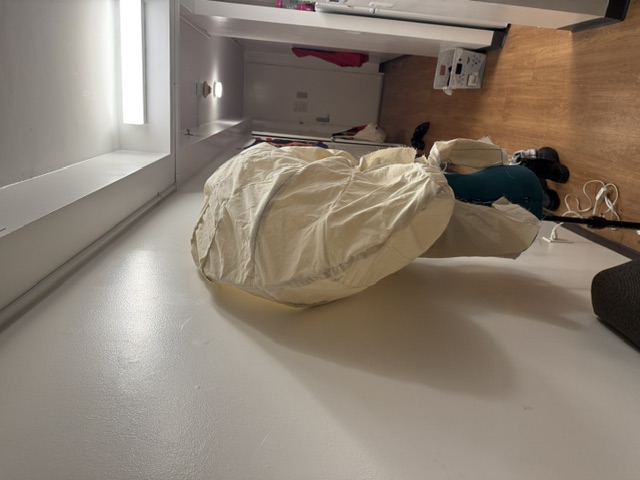
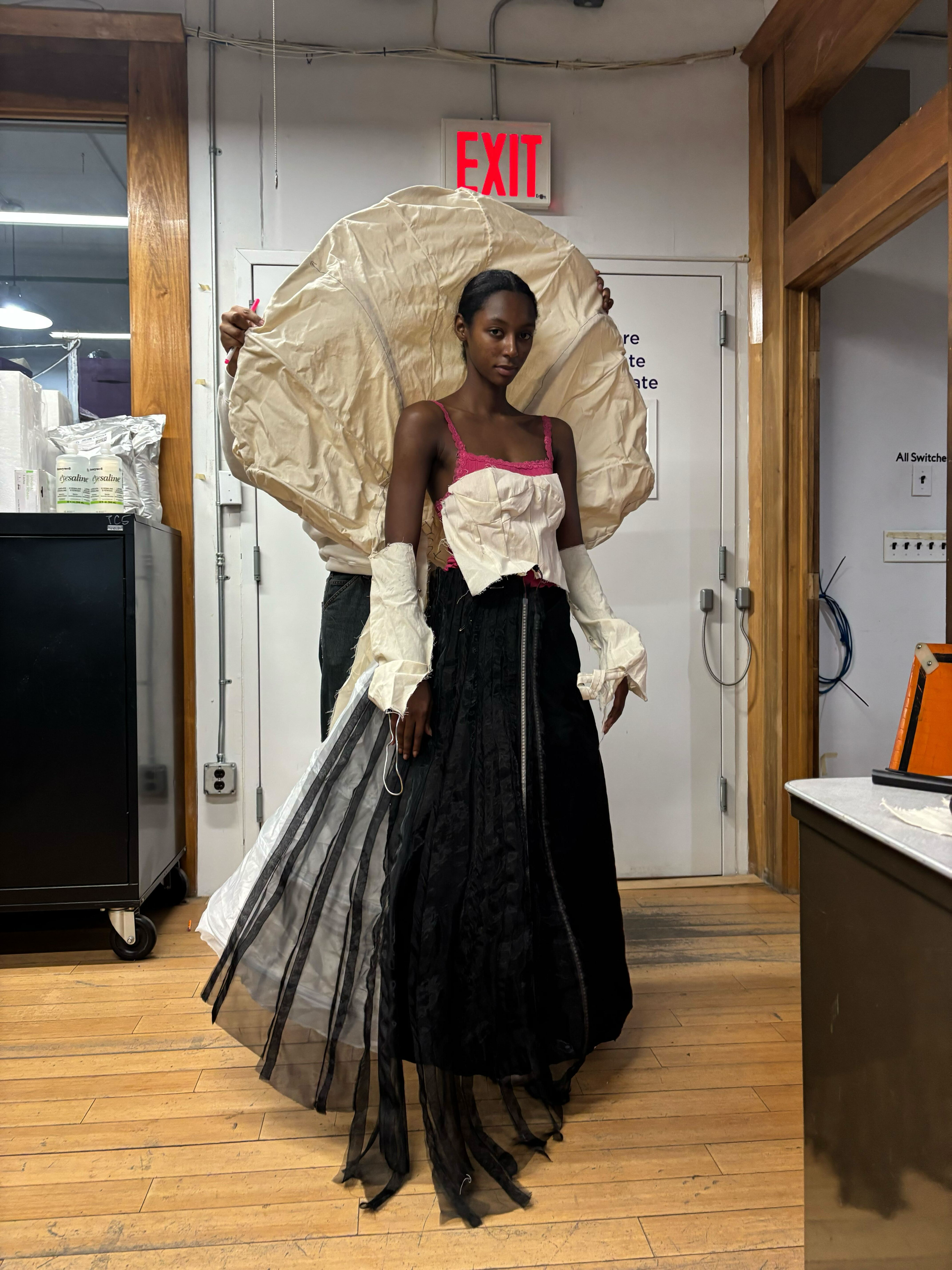
The whisk went through several iterations as we realized it needed to be very large in scale to completely swallow the appearance of the model and abstract the human being into a deity. I constructed the whisk by patterning a tubular shape and adding equidistant channels along its length. I had inserted metal boning after attempting to use plastic boning, which did not provide enough support to fully expand the shape. We incorporated about 10 yards of metal boning as well as wires from tents to keep the tubular effect, invoking ideas of space and the unknown. I then added one long strip of boning across the entire shape.
A complicated part of building this garment was having the whisk stay upright, even as the model walks and moves. I accomplished this by constructing a back brace with four long pieces of wood, each one yard in length. These are attached to the back of the whisk through channels that connect to the back brace, with each part being sewn down. The back brace has a strap that enters through zippers to the front of the garment, and it is fastened along with shoulder straps to achieve the upright position of the whisk.
For housing the LED strips, we came up with double-felled channels by overlapping a sheer organdy fabric with three layers of dress material to shimmer with the sheerness of the skirt. Layered all on top of 15 yards of stiff petticoat, we were able to achieve this massive dress silhouette. We created a belt to cover the midsection as well as housing the connections between the LED strips and all the battery packs, tethering the motion sensors from the ankle bracelets all the way through to the belt.
Mixing hand sewing and machine sewing over 3 months and roughly 150 hours, we were able to achieve this effect.

Light tracking